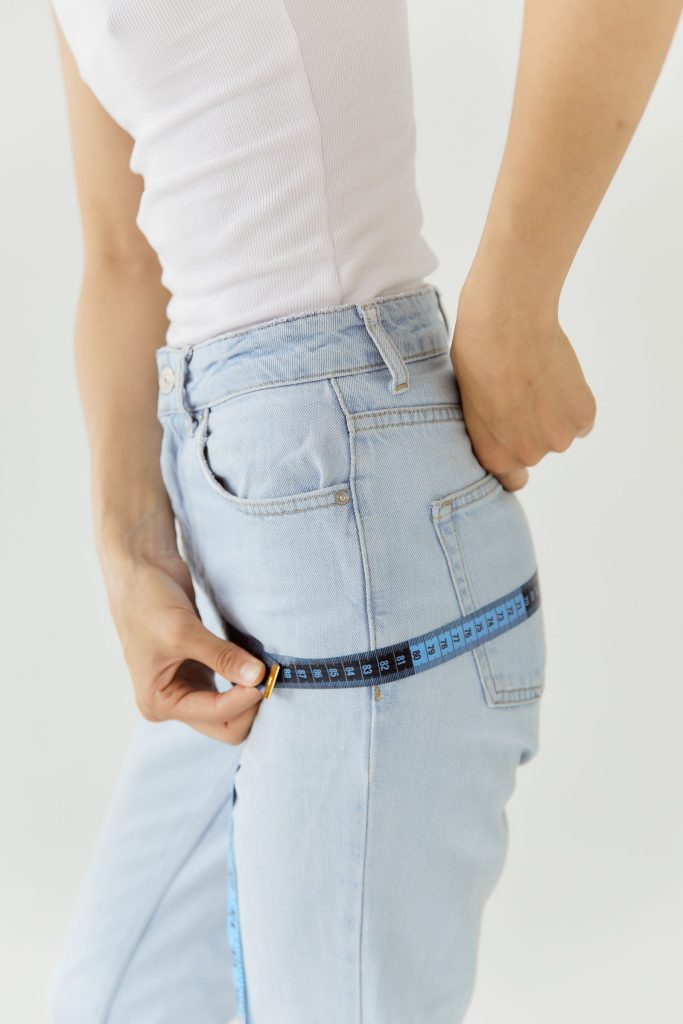
Quick answer: measure a pair of jeans that already fits, not just your body. Lay it flat without stretching: double the waistband width, then record front rise, back rise, inseam, thigh, knee, and leg opening. Compare those garment measurements with the brand’s product chart in the same size and wash. A tagged “30” is a label, not a guaranteed 30-inch waistband.
Why body measurements are not enough
Body measurements help select a size range, but jeans also contain design ease, rise placement, stretch, and wash-specific shrinkage. Two pairs with the same tagged size can sit at different points on the torso and feel completely different.
Your most reliable reference is a pair with the fit you want to repeat. Measure it after normal washing and wearing, then compare like with like: rigid denim against rigid denim, high rise against high rise, and garment dimensions against garment dimensions.
Tools and setup
- A flexible measuring tape with inches and centimeters.
- A flat table or clean floor.
- The jeans buttoned and zipped.
- A notes app or simple table for each pair.
Smooth the fabric without pulling it. Take each measurement twice. Curved seams and elastic denim make small differences normal, so do not pretend to have millimeter precision.
The measurements that matter
| Measurement | How to take it | What it changes |
|---|---|---|
| Waist | Measure straight across the aligned waistband; double it | Top opening and where the jeans anchor |
| Front rise | Crotch seam to top of front waistband | How high the front sits |
| Back rise | Crotch seam to top of back waistband | Seat coverage and waistband angle |
| Inseam | Crotch seam to hem along inside leg | Finished length |
| Thigh | Across the leg just below crotch, then double if circumference is needed | Room through upper leg |
| Leg opening | Straight across hem; double for circumference | Skinny, straight, bootcut, or wide silhouette |
Measure the waistband correctly
Align the front and back waistband edges so the band lies naturally, then measure from outer edge to outer edge. Doubling that flat width gives an approximate garment circumference. Do not pull stretch denim tight unless the retailer explicitly lists stretched measurements.
A contoured waistband may curve. Record both the retailer’s stated method and yours, because a straight tape across a curve will differ from a tape following the seam. Consistency is more useful than chasing one “correct” number.
Front rise and back rise
Front rise predicts where the jeans reach on your abdomen, but the same number can feel different depending on body shape and waistband curve. Measure from the crotch intersection to the top edge beside the fly.
Back rise affects seat room and whether the waistband dips when sitting. It is often absent from product charts, yet it explains why one pair feels secure and another gaps. Measure along the back seam from crotch intersection to waistband top.
Inseam and outseam
For inseam, straighten one leg and follow the inner seam from crotch to hem. Do not include a folded cuff unless you plan to keep it permanent. Outseam runs from waistband to hem and includes rise, so it is useful for comparing the total visual length of different rises.
Shoe choice changes the target. Cropped straight jeans may finish above the ankle; wide legs often need enough length to create a long line without dragging. Measure the jeans while wearing the shoes that will anchor the outfit before paying for hemming.
Thigh, knee, and leg opening
Thigh width is the hidden reason many people size up, then end up with a loose waist. Measure at a repeatable point—commonly just below the crotch—and compare that exact point between pairs. Athletic and curvy cuts can add thigh or seat room without enlarging the waistband as much.
Measure the knee at the retailer’s stated distance below the crotch if available. The leg opening alone does not define a silhouette: a straight leg and a flare can share a hem width while fitting very differently at the knee.
Stretch changes the decision
Fabric labels help predict recovery, not exact fit. Rigid cotton denim molds with wear and may tighten after washing. Stretch blends feel easier immediately but can relax through the day. Compare fiber content and owner comments about bagging, while remembering that weave and fabric weight matter too.
If between sizes, do a sit, stair, and pocket test. The waistband should stay controlled without painful digging; the fly should lie flat; pockets should not pull dramatically; and you should be able to bend without the back sliding too low.
Build a personal fit card
Save measurements for three references: your favorite close fit, comfortable straight fit, and loose fit. Add brand, style, size, fabric composition, wash method, and whether the pair relaxes. Online size charts become far more useful when you can compare them with a real garment instead of memory.
Common mistakes
- Comparing body circumference with a flat garment width without doubling.
- Stretching the waistband during measurement.
- Ignoring rise while comparing waist sizes.
- Measuring a fresh-from-dryer pair against a worn-in pair.
- Assuming every wash in the same style fits identically.
- Hemming before washing according to the care label.
How to use measurements while shopping online
Open the product chart and write the closest two sizes beside your reference pair. Prioritize the hard-to-alter dimensions: rise, seat, thigh, and overall silhouette. A slightly loose waistband is often easier to manage than a crotch seam that is too short or thighs that pull every time you sit.
Then check the return window before ordering. Photograph the tags and keep the jeans clean while trying them with the tops and shoes you actually wear. If the retailer gives only body measurements, ask whether garment measurements are available instead of pretending the two systems are interchangeable.
FAQ
Why is the measured waist larger than the tag? Vanity sizing, design ease, rise position, and brand conventions make the tag an identifier rather than a literal garment measurement.
Can a tailor fix the waist? Often, within limits. Large changes can distort pockets, yoke, and rise. Buy seat, rise, and thigh correctly before relying on alteration.
Should I measure jeans worn or freshly washed? Record both if relaxation matters. For shopping, compare the state that matches how the retailer measured and how you normally wear them.
What if the product page lists only waist and inseam? Ask customer service for rise, thigh, and leg opening or buy from a retailer with easy returns. Missing measurements are uncertainty, not proof of fit.
Sources
- Federal Trade Commission, Care Labeling Rule guidance.
- Use each brand’s garment-size chart and measurement diagram because methods vary.