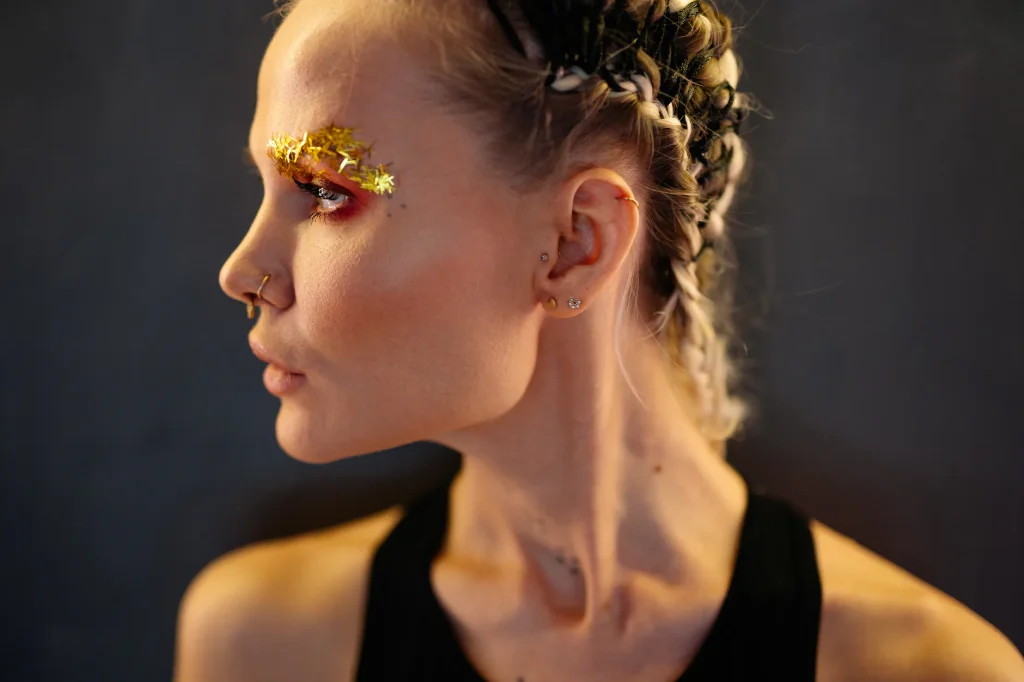
In 2026, ear piercings have evolved beyond simple holes in your lobes; they are now a form of high-fashion “Ear Curation” or “Ear Schema.” Whether you are a minimalist looking for a single statement piece or a maximalist aiming for a “curated ear,” understanding the specific names and locations is the first step toward your aesthetic goal. This guide breaks down every modern piercing name and provides a professional roadmap to designing your own ear gallery.
Essential Tools for Planning Your Personalized Ear Schema
Before booking your appointment at a studio like Studs or investing in luxury Maria Tash pieces, you need to prepare your toolkit for the planning and healing phases.
- High-Definition Mirror and Skin-Safe Marking Pen: Essential for visualizing placement and checking symmetry against your unique ear anatomy.
- NeilMed Piercing Aftercare Spray (2026 Sterile Edition): The industry-standard saline mist ($12.99 – $15.50) required for the first 6 months of healing.
- Hypoallergenic Starter Jewelry: Always opt for Implant-Grade Titanium or 14k Gold (like Mejuri’s cartilage studs) to prevent allergic reactions during the initial inflammatory phase.
Deep Dive: Understanding Ear Piercing Names and Placements
To communicate effectively with your piercer, you must know the terminology. Here is the 2026 anatomy breakdown.
The Classic Zone: Standard Lobe and Stacked Lobe
The Standard Lobe remains the most common starting point. However, 2026 trends favor the Stacked Lobe, where a second or third piercing is placed vertically above the first, rather than horizontally along the edge.
The Cartilage Zone: Helix, Forward Helix, and the Trending “Flat”
The Helix refers to any piercing along the outer upper rim of the ear. The Forward Helix is located on the curve where the ear meets the face. The standout favorite for 2026 is the Flat Piercing—located on the large, flat area of cartilage in the upper ear, it provides the perfect “canvas” for intricate clusters or “Tash Hidden Rook” designs.
The Inner Ear: Tragus, Daith, Rook, and Conch
These placements require more expertise and offer a sophisticated look:
- Tragus: The small “nub” of cartilage partially covering the ear canal.
- Daith: The innermost fold of cartilage; often styled with ornate “clicker” rings.
- Rook: The vertical fold above the Daith.
- Conch: The “bowl” of the ear. You can get an Inner Conch (stud) or an Outer Conch (often styled with a large hoop).
Unique Placements: Industrial and Orbital
The Industrial is a bar connecting two holes (usually in the Helix), while an Orbital consists of two holes connected by a single ring. These are anatomy-dependent and require a consultation at a professional studio like Studs ($35-$60 piercing fee).
Step-by-Step: How to Map Your “Ear Gallery”
Follow these professional steps to ensure your ear curation looks intentional and balanced.
- Identify Your Anatomy: Look in the mirror and identify which areas of your ear have prominent folds or flat surfaces. Not everyone has the space for a Daith or a Rook.
Pro Tip: Most professional piercers in 2026 offer an “Ear Schema” consultation. They will use a marking pen to show you how a specific name—like a Flat or a Tragus—will look on your specific ear shape before the needle ever touches you.
- Apply the “Three-Point Principle”: To achieve a balanced look, aim for a triangle of focal points. For example, a Lobe piercing, a Helix piercing, and a Conch piercing create a visual triangle that guides the eye across the entire ear.
- Select a Theme and Material: Decide on your metal (14k Yellow Gold, Rose Gold, or Silver-toned Titanium) and your “vibe” (Minimalist, Gothic, or Luxury). Mixing Mejuri minimalist studs with a centerpiece from Maria Tash is a popular 2026 strategy.
How to Choose Jewelry Based on Piercing Names
Different locations require specific types of hardware to heal correctly and look stylish.
Flat-Back Labrets for Tragus and Conch
For internal piercings like the Tragus or Conch, use flat-back labret studs. These prevent the jewelry from poking the side of your head while you sleep and allow for better hygiene.
Clicker Rings for Daith and Helix
Once healed, the Daith and Helix are best suited for “Clicker Rings”—hoops with a hinged closure that “click” into place. These offer a seamless, high-end look without visible gaps.
Safety Warning: For new piercings, your piercer will use a longer post to allow for “Swelling Management.” Do not attempt to switch to a tight-fitting hoop or a short stud until the initial 2026-recommended healing window has passed.
Expert Advice: Healing Times and Aftercare SOP
A beautiful curation is only successful if it heals properly. Different names come with different healing expectations.
Lobe vs. Cartilage Healing
- Lobe Piercings: Generally heal within 6 to 8 weeks.
- Cartilage (Helix, Conch, Rook, etc.): These take much longer, typically 6 to 12 months, due to lower blood flow in the tissue.
The 2026 Daily Cleaning SOP (Standard Operating Procedure)
To avoid irritation bumps and infection, follow this strict routine:
- Spray: Apply NeilMed Aftercare Spray directly to the front and back of the piercing twice a day.
- Pat Dry: Use a clean paper towel or a hairdryer on the “cool” setting to remove moisture. Never use cotton balls, as fibers can snag.
- LITHA (Leave It The Hell Alone): Do not rotate, twist, or touch the jewelry. This is the most critical rule for 2026 piercing health.
Final Expert Insight: If you notice localized redness or a “bump,” don’t panic. This is often just an “irritation bump” caused by sleeping on the ear. Switch to a travel pillow (with a hole for your ear) to maintain your curation’s integrity during the healing year.